Tuesday, 11 February 2014

Our Group Ident

GROUP IDENT


So today we decided as a group to create our group ident. We used a few different adobe programmes such as, Fireworks, Photoshop and Premier Pro. We did run into a few problems whilst we were creating the ident as non of our group members had experienced or had any idea as to how we would use some of the programmes that we did. However, we had loads of questions about how to use the programmes and decided to search many of the questions we had into Google and YouTube. We were then able to get a basic understanding of how to use many of the programmes that we needed to and we were then able to create and finish our group ident.

Wednesday, 5 February 2014

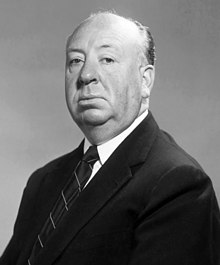
Alfred Hitchcock

Hitchcock, Alfred 02.jpg

Sir Alfred Joseph Hitchcock was an English film producer and director. After a successful career in both silent films and early talkies, renowned as England's best director, Hitchcock then moved to Hollywood in 1939 and then became a U.S citizen in 1955.
Hitchcock was dubbed as 'the master of suspense thrillers' and is said to have directed fifty- three films in six decades. Out of all the the movies that he directed only one was 'lost' due to the celluloid which was his second film 'Mountain Eagle'. 


Mise-En-Scene

Mise-en-scene

Mise-en-scene is a french word that refers to everything that is seen in the scene or frame. Mise-en-scene would include: 

  • Settings and Props
  • Costume, hair and make-up
  • Facial expressions or body language
  • Lighting and colour
  • Position/location within the frame
When filming a scene, every aspect is looked over carefully. For example in a thriller the audience is likely to see old, eerie settings, weapons, suits or spy clothing, well represented body language, low key lighting and bright explosions. Mise-en-scene has to been carefully constructed to fit its specific genre and narrative. 

An example of how Mise-En-Sene taking place would be when watching a horror or a thriller, you would typically expect there to be blood and gore. You would also expect the 'bad guy' to be covered in blood or to wear specific dark clothes to portray his/her character.


Sound

Within media productions there are multiply types of sound. These consisting of:                ·       

Diegetic sound- this is the sound that has not been edited into the film and would be               found in the film.

Non- diegetic sound- this is the sound that has been added into the film and would not           be typically found in a film.

On screen sound- this is the sound that is diagetic and fits to the action happening on           screen.·        

Off screen sound- this is the sound that again is diagetic but occurs out of the scene.·         

Parallel sound- this is the sound that fits the action·        

Contrapuntal sound- this is the sound that doesn't fit to the scene·         

Sound bridge- a sound bridge is sound that carries on from one scene to another.The use of sound is very important in any media production and sometimes even the lack of sound is effective within a scene. Sound helps the producer to produce the feeling and emotions tat they want the audience to experience.


Thriller Genre Conventions

The thriller has multiple conventions that highlight the idea of the film being a thriller. For example there are typical characters, iconography, settings, themes etc. for example in more recent thrillers we have a typical strong, handsome and well groomed man that is usually the main character and seen as the protagonist and the typical setting for a thriller seems to be a deserted and isolated place.


Cinematography

Cinematography is the art of camera work and photography throughout a piece of media film. Cinematic style is referred to as the camera work and music that is commonly found within a particular genre. Audiences do not normally recognize cinematography however without cinematography conventions the audience wouldn't be able to recognize what genre the film would be categorized into. 

Camera shots:

  • Long shot (LS)
  • Close up (CU)
  • Medium Shot(MS)
  • Extreme Close up(ECU)
  • Low angle(LS)
  • High angle(HA)
  • Point of view(POV)

Narrative


            Narrative

Narrative refers to the sequence of events. There are people that get ‘Narrative’ and ‘Story’ confused. Narrative is the way in which the story is represented to its audience. It doesn’t necessarily have to be in a specific continuous ordered for example in ‘Interview with a vampire’ the film starts off with the ending scene.